Author Archives: admin

  • 0
mutton-chukka

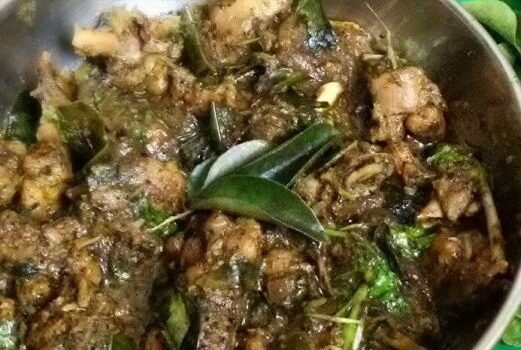
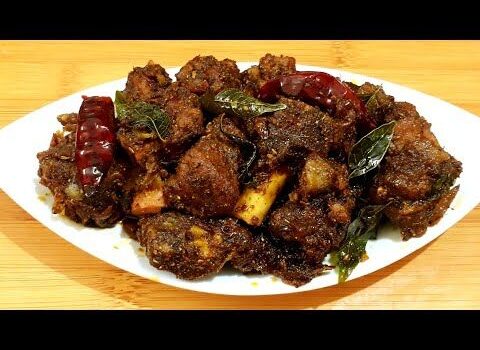
Chettinad Mutton Chukka Varuval

Category : Samayal Contract

Ingredients

  • Mutton (Lamb/Goat Meat) 450 g / 1 libra
  • Turmeric Powder: 1/4 teaspoon 
  • Ginger Garlic Paste: 1/2 teaspoon 
  • Red Chili Powder: 1 teaspoon 
  • Salt to taste 

To Pressure Cook : 

  • Red Small Onion /Shallots : 2 tablespoons(finely chopped) 
  • Garlic : Chopped-5 pods 
  • Turmeric powder : 1/2 teaspoon 
  • Coriander powder : 3 teaspoons 
  • Red Chilli Powder : 1

To Grind :

  • Grated coconut: 2 tablespoons 
  • Fennel seeds: 1 teaspoon 
  • Poppy Seeds: 1 teaspoon 

For Sauteing: 

  • Clove: 2 
  • Cinnamon: 1 inch piece 
  • Bay leaf: 1 
  • Fennel seed: 1 teaspoon 
  • Curry leaves: 1 sprig 
  • Red Small onion/Shallots: 25-30 or Onion/Savola: 2 (Medium) 
  • Tomato: 1 (finely chopped) 
  • Ginger- Garlic paste: 1 teaspoon 
  • Sakthi Mutton Masala powder or Red Chilli Powder

Preparation

  1. Wash and cut mutton into little pieces, marinate with the ingredients given in To Marinate for at least 30 minutes.
  2. Heat 1 tbsp oil in a pressure cooker, then add the marinated mutton and saute for a couple of minutes. 
  3. Add all of the ingredients listed under “To Pressure Cooker” and mix well. Close the cooker and cook for about 8 minutes after the first whistle (after it comes to full pressure), then reduce the fire to medium, then turn off the heat and let it cool naturally.
  4. Meanwhile, mill the things listed in “To Grind.” In a Kadai/saucepan, heat 2 tablespoons of oil and sauté clove, cinnamon, bay leaf, fennel seed, and curry leaves for a minute.
  5. Add ginger-garlic paste, diced onion, and chopped tomatoes and cook till transparent. Sauté the grounded masala for a few minutes. Remove the mutton from the cooker and set it aside.
  6. Add the remaining gravy to the Kadai, followed by the mutton masala powder or red chili powder, mix well, and adjust the salt.
  7. Continue to whisk the liquid over high heat until most of the water has evaporated and the liquid has thickened. Fry the mutton chunks until they are fully covered with masala and dry.
  8. Remove from the fire and stir in the remaining curry leaves. It goes nicely with curd rice, parotta or any roti variety, biriyanis, and so forth.

  • 0
kathirikai-kulambu

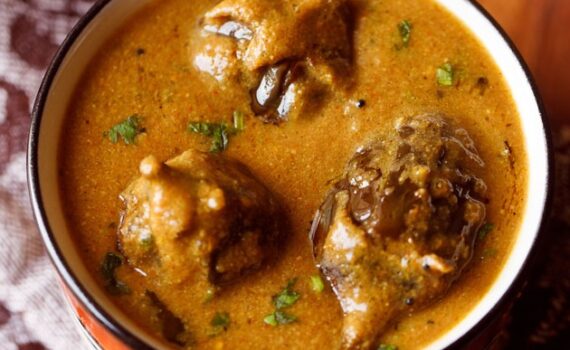
Ennai Kathirikkai Kuzhambu Recipe

Category : Samayal Contract

INGREDIENTS

  • 1 cup – 250ml 
  • Small sized brinjal – 10 nos 
  • Small onion / Chinna Vengayam – 10 nos 
  • Garlic cloves – 10 nos 
  • Tomato – 1 no (country variety/Naatu thakkali) 
  • Tamarind – Small lemon sized 
  • Red chilli powder – 2-3 tsp 
  • Coriander powder/Dhania powder – 2 tbsp 
  • Salt & water – as needed 

To temper

  • 1/4 cup Sesame oil / Gingelly oil
  • Mustard seeds – 1 tsp 
  • Fenugreek seeds – 2 
  • pinch Curry leaves – a few sprigs

METHOD

  • Mark an X on the top of the brinjals halfway down without cutting the stem section. Soak them in water until ready to use. Soak small lemon-sized tamarind in 1 cup of boiling water. Set aside the extract. Peel the onion and garlic and set them aside.
  • In a separate bowl, combine 1 tbsp tamarind extract, red chili powder, dhania powder, turmeric powder, and salt. To make a thick paste, thoroughly combine all of the ingredients. Fill the brinjals with this paste and arrange them on a platter.
  • Heat 1/4 cup sesame oil in a pressure cooker base (I used cooked to create the gravy quickly and to save time) Reduce 1 tbsp oil if you feel there is too much oil. You may also cook this gravy in a kadai. Splutter the mustard seeds, methi seeds, and curry leaves. Add the small onions and garlic cloves and sauté until the onion turns translucent.
  • Add the masala stuffed brinjal pieces along with the remaining masala and cook well till the brinjal shrinks somewhat. Add finely chopped tomato pieces and mix well for a minute. Mix in the tamarind essence, 1/2 cup additional water, and the salt. Allow it to come to a rolling boil. Cover and cook for one whistle on very low heat. Allow the steam to escape naturally before opening the lid.
  • If cooking in a kadai, cover with a lid and heat until the brinjal softens and the gravy thickens to your liking. The gravy thickens and the oil spills out. Serve with plain rice and papad!

Note: 

  • Do not lower the amount of dhania powder because it helps to thicken the gravy.
  • Sambar powder can be used in place of the red chili powder and dhania powder.
  • You can also add a small amount of jaggery if desired.
  • If you want your kuzhambu spicy, add additional chili powder.
  • Because we’re adding additional oil, this gravy will keep for a week without refrigeration.

  • 0
Karupatti paniyaram

Karupatti Paniyaram Recipe

Category : Samayal Contract

Recipe for karupatti paniyaram with step-by-step photos. Karupatti paniyaram is made for Pillayar Nombu in Chettinad. I love the flavor of karuppati (palm jaggery) and this is the first time I am making this karupatti paniyaram so wanted to try the authentic way and it turned out soo perfect. By now I am sure you all know that I don’t take any easy short routes at least when trying for the first time.

Ingredients

  • 1 cup Raw Rice 
  • 1/2 cup Karupatti (Palm Jaggery) neatly packed 
  • a good pinch Dry Ginger Powder 
  • 1/4 tsp Cardamom powder 
  • Oil to deep fry 
  • 1/4+1/4 cup Water as needed 

Instructions

  1. Drain the raw rice fully, then lay it out on a soft towel to dry for 45 minutes. This should just be slightly damp. Transfer to a mixer.
  2. In stages, grind it to a fine powder in a food processor, then sieve it. If you find little balls, break them up and filter them.
  3. I use a hand mortar and pestle to smash the palm jaggery. Transfer the crushed palm jaggery to a pan.
  4. Add 1/4 cup water and mash it thoroughly with a potato masher.
  5. Cook for a few minutes until the jaggery melts entirely. Strain to eliminate impurities and cool fully.
  6. Put the flour in a mixing bowl and gradually add 3/4 of the syrup.
  7. Mix well with a laddle, then gather to form a dough. Refrigerate it for a day, traditionally the dough is held for a day to rest. But I kept for 2 hours before proceeding.
  8. Add about 1/4 cup water, followed by the remaining palm jaggery syrup.
  9. Mix thoroughly to make a smooth batter with no lumps, similar to dosa batter. Add cardamom and dried ginger powder and mix well.
  10. Heat the oil in a skillet, then drop a laddle full of batter into the heated oil.
  11. When it’s golden, flip it over and cook until it’s reddish-brown on both sides.
  12. Drain on tissue paper. You can also make it in a paniyaram pan. Serve hot or warm.

Notes 

  • It is preferable to allow the dough to rest for an extended period of time. The traditional recipe calls for the dough to rest overnight in the refrigerator.
  • The borders are a little crunchy, but the middle is mushy.
  • Palm jaggery is the star of this recipe, so don’t look for substitutes.
  • The rice flour and palm jaggery syrup can be made the day before.
  • You can try using ready-made rice flour, but the taste will not be real.


Steps: 

  1. Soak raw rice in water for at least 2 hours. Drain water completely and rinse again.
  2. Spread the raw rice in a soft towel and allow it to dry for 30-45 minutes. It will be slightly moist only and a few rice will stick to your hands when touched and seen, this is the perfect stage. Then transfer this to a mixer.
  3. Grind to a fine powder. Transfer to sieve. Sieve well. How to make rice flour at home – Step2 Crush palm jaggery, I use my hand mortar and pestle. Transfer crushed palm jaggery to a pan.
  4. Heat it up and cook for a few minutes, or until the jaggery melts completely. Strain to remove impurities.
  5. Hot to create Sweetners for Baby Food – Step3 Place the flour in a mixing basin and gradually add 3/4 of the syrup.
  6. Mix thoroughly with a laddle, then gather to form a dough. Refrigerate it for a day, traditionally the dough is kept for a day to rest. But I kept for 2 hours before proceeding. Now shred the dough.
  7. Add about 1/4 cup water, followed by the remaining palm jaggery syrup.
  8. Mix thoroughly to get a smooth batter without any lumps, it will resemble a dosa batter. Mix in the cardamom and dry ginger powder.
  9. Heat oil in a pan – take a laddle full of batter and pour it in the heated oil. Slowly it will come up, the sides will fold inwards giving it a flowery edge.
  10. When it’s golden, flip it over and cook until it’s reddish-brown on both sides.
  11. Drain in tissue paper. Alternately, you can make it in a paniyaram pan.
  12. Serve hot or warm.

Soft paniyarams are ready with this Karupatti Paniyaram Recipe!!


  • 0
Vazhaippoo Vadai

Vazhaipoo Vadai

Category : Samayal Contract

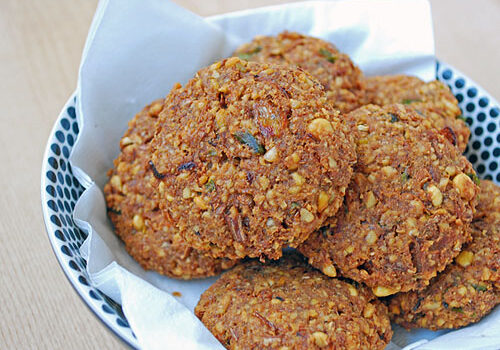
Chettinad unique Vazhaippoo Vadai, Banana flower, and dal deep-fried as patties have a crispy, delightful flavor. Everyone enjoys fritters, so treat your guests to a range of Chettinad delicacies.

Banana blossom also has numerous health benefits. Some people shun it because of its sour taste, but in this vada, it provides an amusingly unusual flavor to appreciate, making vazhaipoo vada a unique one to offer.

Many women experience pain during menstruation. Some women experience severe PMS symptoms, while others bleed profusely. A cup of cooked banana flowers can aid in the resolution of these issues. Cooked banana flowers with curd raise progesterone levels in the body and prevent bleeding. Calculated banana flower consumption lowers blood sugar levels. It also raises the body’s overall haemoglobin levels.

Banana blossoms are high in vitamins such as A, C, and E. They are also high in potassium and fiber. As a result, they are a wonderful source of nutritious nutrients and a good source of healthy food.

It takes a long time and effort to clean flowers but tastes delicious. Because this is a tedious and time-consuming job, the floral nerve part must be eliminated and chopped or cut into very small pieces before squeezing out superfluous water. If you have the patience to complete all of this, you will be rewarded with a tasty dinner.

Ingredients:

  • Banana Flower (vazhai poo) – 1 1/2 cup (chopped squeeze and remove the juice from the flower) Toor Dal – 1/2 cup 
  • channa dal one tbsp soak and set aside 
  • Red chili – 4 
  • Fennel seeds – 1 tsp 
  • Garlic-3pods 
  • Onion-1 big size finely chopped 
  • Curry leaves 1 
  • chopped Salt – 1 tsp 
  • Turmeric powder-1/4 tsp

To Make Vazhaipoo Vadai:

Grind the red chile, fennel seeds, garlic, and soaked toor dal coarsely. (drain all of the water from the soaked dal) 

  1. Do not add water when grinding (if necessary, use 3 tsp of water or squeezed juice from the chopped flower). 
  2. In the ground to dal mixer, combine chopped banana flower (flowers can be ground to a coarse mixture), chopped curry leaves, soaked channa dal, and chopped onion.
  3. Mix in the salt and turmeric powder thoroughly. Make lemon-sized balls and put them on a platter.
  4. Now, using your palm, flatten the balls into patties.
  5. Heat the oil over medium heat and fry the vada 5 or 6 at a time until golden brown. Drain the oil, set the vada on a paper towel, and serve.

  • 0
ukkarai recipe

Chettinad Ukkarai Recipe | Ukkara recipe

Category : Samayal Contract

Ingredients

  • 1/4 cup moong dal 
  • 1/8 cup Rava 
  • 1/8 cup rice flour 
  • 1/8 cup coconut grated 
  • 1/8 tsp cardamom powder a very tiny pinch of salt 
  • 1.5 tbsp cashews broken 
  • 1 tsp oil 
  • 4 tbsp ghee around 2 cups + 1/2 cup water 

For jaggery syrup:

  • 1/2 cup powdered jaggery 
  • 1/4 cup water 

Instructions

  1. To a saucepan – add jaggery and water
  2. In a tadka pan, heat 2 tbsp ghee and fry cashews until golden brown, then leave aside. Dry roast moong dal until golden, then add 2 cups water.
  3. Cook till soft, dal should look whole but easily mashable. Transfer to a bowl and set aside. If there is any water, strain and set away.
  4. 2 tbsp ghee – add Rava and fry for a minute, then add rice flour and fry for another minute.
  5. Cook for a minute after adding the coconut. Then add the cooked dal and combine well. Finally, add 1/2 cup water to allow the flour and rava to cook.
  6. Cook until the mixture is thick, then drain and add the jaggery syrup.
  7. Cook till it rolls well. Add cardamom powder, salt, and fried cashews and mix well.

Notes: 

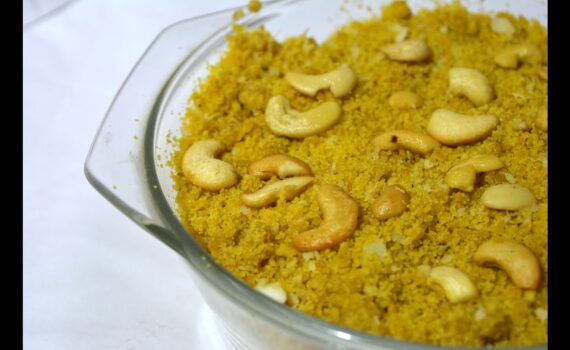
  • The consistency of Chettinad ukarai is more like halwa, but if you wish, you can cook it for a few minutes longer to make it more like puttu.
  • It was salted to bring out the sweetness.
  • Only after the rice flour and sooji have completely cooked, add the jaggery syrup.
  • Moong dal can also be pressure cooked for 2 whistles.
  • If there is extra water after cooking the moong dal, drain it and use it in sambar or soups.
  • The oil gives the sweet a velvety feel.
  • Reduce a tbsp of ghee if desired, but don’t reduce too much or the texture will be off.

  • 0
vathal-kuzhambu

Vathal Kuzhambu:

Category : Samayal Contract

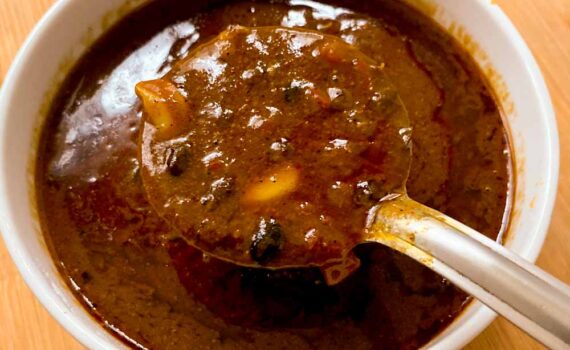
To make the meal Maharaja, South Indian meals include a variety of Kuzhambu combinations, desserts, and vegetables as a side dish. Vathal kuzhambu is a tangy, sweet, sour, and slightly spicy curry that can be refrigerated for 3 to 5 days and eaten with plain-cooked rice. It goes well with Idli dosas as well.

This method can be used to make curries with sun-dried berries (manathakkali vathal) or Sunda vathal, Thakkali (Tomato)kuzhambu, Poondu (Garlic)kuzhambu, and kara kuzhambu. This kuzhambu has fans all around the world because it provides the delicious feeling of a full dinner with tongue-tickling delicacies.

Ingredients:

Vathal-1tsp powder

Onion-1/2 cup 

Garlic 7 pods 

Tomato-1 

Tamarind-lemon sized ball 

Chilli powder-2 tsp 

coriander powder-2 tsp OR 

sambar powder-3 tsp 

To season: 

Oil-2 tbsp 

Vathal (sun dried berries) (manathakkali vathal) or Sunda vathal – 2 tablespoons 

Fennel seeds-1/2 

Cumin seeds-few 

Methi seeds-few 

Curry leaves-2 twigs 

sesame oil-1 tsp 

Preparation: 

  1. Pearl onion, garlic, and tomato, peeled and sliced
  2. Soak the tamarind in 1/2 cup warm water for 30 minutes to extract the pulp.
  3. To achieve the added flavor of vathal infused kuzhambu, roast 1 tsp of vathal and grind it to powder.
  4. Pour 2 cups of water, salt, tamarind extract, chili masala powders, and turmeric powder into a mixing basin and set aside.

The first half of the preparation is now complete.

Method:

Heat oil in a skillet and add “To season item” Vathal to proceed with other things after spluttered add curry leaves and sliced vegetables simmer for 3 minutes until you get a wonderful aroma.

Now add the combination that we made in step 4 above, along with the roasted crushed vathal powder.

Allow it to boil until it reaches a semi-liquid consistency; you’ll see the oil gradually floats to the top at this point, and it’s time to add the jaggery and sesame oil.

Stir thoroughly and leave to simmer for 2 minutes.

Place in a serving bowl.


  • 0
mavvu-urundai

Maavu Urundai

Category : Samayal Contract

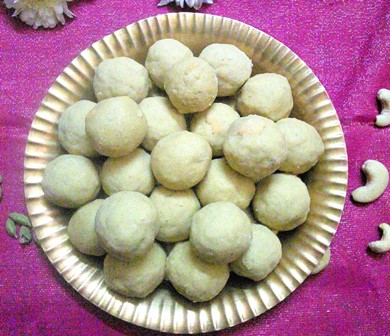
A type of laddu is maavu urundai. Made from Pasi paruppu (MOONG DHAl). Sugar and ghee…..this is extremely simple to make and delicious to eat……try it out….kids will enjoy it…

Ingredients

1 cup Moong dhal (payatham paruppu) (roast and powdered) 

1 cup Powdered sugar 

2 T Coconut (grated) 

1/4 cup Ghee (increase or decrease proportionately) 

1/4 tsp Elachi powder (optional)

Instructions

Until golden brown…set aside and cool… Grind sugar into powder and add elachi powder. 

Grind the moong dhal until it is a fine powder and sift it.

Fill a basin halfway with powdered sugar. Add moong dhal powder, as well as the scraped coconut, heat 50g/( 1/4 cup) ghee, then add it to the moong dhal powder and sugar powder little by little, mixing everything thoroughly.

Produce them into balls as soon as possible; otherwise, it would be impossible to make balls. If it’s too difficult, try forming balls with ghee or oil in your hand.

Form it into softballs and store it in an airtight container.

We won’t be able to keep them for more than a few days.

Mavvu urundai is ready for consumption.

Notes 

We can use satthu mavvu, which is available in stores, to make the same dish.


  • 0
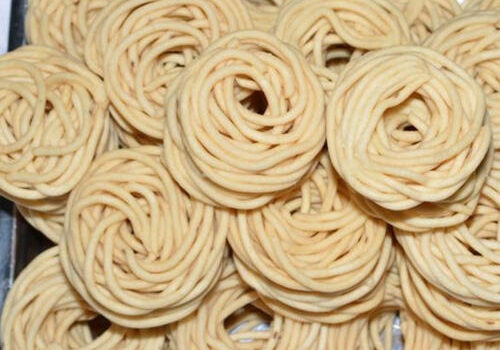
Thenkuzhal Murukku

Chettinad Thenkuzhal Murukku Recipe

Category : Samayal Contract

Its flavor will remind you of the traditional thenkuzhal dish that our grandmothers used to make without butter. You can add melted butter or ghee to make soft murukku, but the color of the murukku will change. Finally, you can make this murukku with or without butter. You can also attempt the same recipe with store-bought idiyappam flour, although the results may vary significantly. Friends, try this simple, delicious Chettinad thenkuzhal recipe for Diwali and have fun!

INGREDIENTS

  • 1 cup – 250ml Raw rice
  • Pacharisi ( IR20 ) – 1 cup ( Maavu arisi) 
  • White urad dal – 1/4 cup + 1 tbsp Salt – as needed Ghee – 1 tbsp (Optional, I did not use) Water – to knead the dough

HOW TO MAKE CHETTINAD THENKUZHAL

  1. Drain all of the water. Cover with a white cloth. Dry for a day or two in the shade.
  2. After the rice has dried fully, crush it to a fine powder. Set aside the sieve.
  3. Dry roast white, round urad dal till hot without altering its color. It should be powdered and sieved.
  4. Mix in the rice flour, salt, asafetida, and melted ghee (if using). Pour in the necessary amount of water.
  5. Produce a smooth dough. Heat the oil for deep frying. Murukku should be pressed and shaped. Put a drop of oil in.
  6. Deep-fried both sides until the bubbles stop. Remove from the oil, drain, and keep in a box.
  7. Chettinad thenkuzhal is complete. It lasts for a month.

CHETTINAD THENKUZHAL RECIPE

  •  As a first step, make Chettinad thenkuzhal murukku maavu. Wash the maavu pacharisi (IR20 raw rice) and soak it in enough water for 1 to 2 hours this. Drain the water and place the soaked rice on cotton cloth in the shade for one day, depending on the weather. Do not dry your clothes in the sun. The rice should be fully dry. Alternatively, you can simply bake the rice till puffed and then ground it.
  • Once the rice has dried, grind it in a mixie to a fine powder. Sieve in a large plate, then re-grind the coarse ones until smooth. Repeat until all of the rice is finely crushed. 
  • Dry roast white, round urad dal until hot. Roast it patiently without allowing the color to change. Murukku does not turn out white if the dal is roasted till golden brown. Continue to combine and toss the dal. When the dal becomes hot, take it from the heat and set it aside to cool. 
  • Grind the dal to a smooth powder. Sieve and combine with rice flour. Mix in the salt, hing, and melted ghee (if adding). Combine thoroughly. Then add the water as needed to form a smooth dough. It’s fine if the dough is a little sticky.
  • Fill the murukku press halfway with dough ( I sealed 2 holes with cello tape inside and outside). Heat the oil for deep frying. Check the temperature of the oil by dropping a bit of dough into it. Maintain a low to medium flame and compress the murukku directly over the oil OR press the murukku in a greased ladle or a sheet as shown in the picture. Then drop it into the boiling oil. You can place 3–4 murukku in each batch. Flip it to cook both sides. Cook till the bubbles stop completely.
  • Maintain white in color if fried in medium heat with tossing as needed. If you put ghee in the dough, the color may vary significantly. Take the murukku out of the oil. Using a paper towel, blot the excess oil. Repeat this process in batches. Chettinad thenkuzhal is complete. Allow the murukku to cool before storing it in a box. It keeps for a month. Enjoy! 

Note: 

  • You can wash the rice, dry it in the shade, and grind it in a mill, or you can dry roast it till puffed and then ground it. Both are effective.
  • Rice to urad dal ratio is 2.5:1. Some recipes also call for a ratio of 3:1.
  • The use of ghee or butter helps to give the murukku a soft texture, but the color may not be pure white.
  • If you believe the oil has become too hot, turn off the flame and allow it to cool. Then on to the next batch.

Chettinad thenkuzhal murukku is ready for consumption! Try it out for Diwali.


  • 0
pepper chicken fry

Chettinad Pepper Chicken Fry

Category : Samayal Contract

This Spicy Chettinad Pepper Chicken Fry/Roast is a delectable Tamil-style dish. It’s ready in 45 minutes and, despite being a dry roast, there’s enough masala coating the chicken to serve with Rotis! It’s hot, but the kind that makes you want to take another taste!

I was craving something spicy after eating too much Bengali food the day before. When Denver went for Pune, I was eager to try something new. I came upon this hot Chettinad pepper chicken masala while surfing Pinterest. It looked like the perfect thing for a sleep-deprived Monday, and believe me, it took precisely 45 minutes from start to finish. This is ideal when you have a mound of work to catch up on and can’t afford to waste time messing around in the kitchen!

Due to the high spice levels, I hadn’t eaten much Chettinad food before, but it looked so amazing that I couldn’t pass it up. Denver, in general, avoids too much spice, but I’m the queen of sampling everything. This pepper chicken fry is spicy but not overpoweringly so. It’s hot, but not in a sweaty, nose-sniffing kind of manner. It’s a dry roast, but there’s enough space on the chicken to dig in with your rotis.

Additional mfs recipes you might like Because it hasn’t yet been taste tested by Denver, this recipe is likely to be in the minority on the blog. But I know he’ll nod when he bites into it. The chicken is moist and succulent, and the masala adheres to it so well that you don’t need it anymore.

When I started roasting the dry spices when I started cooking from this recipe, I knew it was going to be a hit. It’s a flavor combination that tempts you to wish it would cook faster. And it’s all about the spices, so don’t skimp on them when you make this!

If you try this, I strongly advise you to use curry leaves and whole spices. Don’t be lazy and substitute coriander powder for coriander seeds; it just won’t do. If necessary, make a trip to the store or get them online, but trust me when I say it’s worth the effort.

Please don’t be disappointed if you’re a vegetarian. This recipe should work just as well with mushrooms or potatoes.

love curries? try these out:

  • Creamy Matar Paneer Curry
  • Goan Prawn Curry with Coconut
  • Chicken Kori Rotti | Mangalorean Chicken Curry
  • Indian Mutton Curry (Lamb Curry in a Pressure Cooker)

Spice Mix:

  • 1 tablespoon Cumin seeds or Jeera
  • 1 tablespoon Coriander seeds or Dhaniya
  • 5 Kashmiri Red Chillies dry Note 2
  • 1 tablespoon Black Pepper whole or Kali Mirch
  • 1/2 teaspoon Fennel Seeds or Saunf
  • 3 Cinnamon sticks
  • 4 pods Cardamom Green
  • 1/4 cup Coconut Grated

Instructions

  1. 500 grams Chicken bone-in, curry cut 1 teaspoon Turmeric Powd Take care not to overcook the spices. Make a coarse paste with 2 tablespoons water.
  2. While the spices roast, brush the turmeric powder over the chicken and set aside.
  3. Heat the coconut oil in a skillet and add the mustard seeds and fennel seeds. When they begin to crackle, add the spice paste and continue to cook for 5-7 minutes.
  4. Then stir in the onion and ginger-garlic pastes. Cook until the onions are light pink, then add the tomato puree
  5. Wash the chicken and place it in the pan with 1/4 cup water, curry leaves, and salt.
  6. Cook for 15 minutes, covered, on medium heat. Check it every few minutes to ensure it isn’t stuck to the bottom.
  7. After 15 minutes, remove the lid and turn up the heat to allow the liquid to begin evaporating. Once the chicken is cooked and most of the liquid has evaporated, continue to cook it for 2-3 minutes in the pan, swirling constantly, to roast it before turning off the heat.

Notes

Chettinad Chicken Pepper Roast is best served with hot rotis and ghee rice.

Notes I love coconut oil for this recipe, but you can use any oil you like or even ghee. Feel free to increase or decrease the number of chillies to your liking.


  • 0
Crab Masala

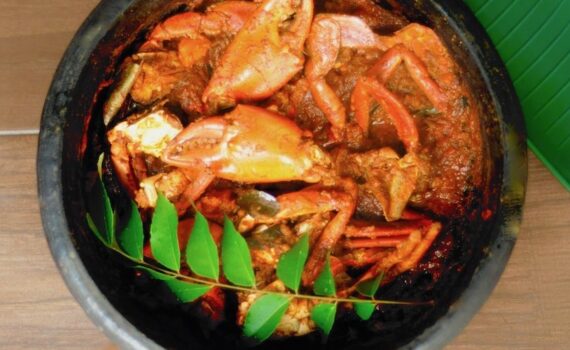
Chettinad Crab Masala

Category : Samayal Contract

Crab is my favorite food. Crabs are my weakness; anytime I am bored or dull, my mother prepares crab for me, and no matter how she prepares it (dry or sauce), I simply adore them and devour them in a hurry. Then I started experimenting with different crab dishes and discovered this fantastic tasty Chettinad Crab Masala; I’ve been making this recipe on a regular basis since then. My parents, friends, and relatives all appreciated my recipe and gave me extremely favorable feedback. So I wanted to share this dish with you, my dear friends.

Since relocating to the United States, I’ve been buying crabs on a regular basis, and I have a separate budget for them (since King Crabs are more expensive). My favorite combination is crab curry with rice and fryums. This Chettinad Crab Masala is a treat for seafood enthusiasts. My husband never touches rice on that day since he converts into a true non-Vegetarian (one whole plate of crabs). Delicious crab meat cooked in a delicious gravy. A great side dish that goes with everything and may even be served as a stand-alone starter.

This crab curry pairs beautifully with Chapathis and Pooris….go Let’s hunting!!!!

INGREDIENTS

  • 1 kilogramme crab (king crab)
  • Roasting on the grill
  • 1 cup shredded coconut
  • 1 tablespoon pepper corns
  • 1 tablespoon cumin seeds
  • 2 dried red chilies

To make crab masala

  • 1 tablespoon ginger garlic paste
  • 1 large onion (250g)
  • 2(150g) Tomato
  • 1/4 teaspoon Turmeric Powder
  • 1 tablespoon coriander powder
  • 2 tablespoons Chili Powder (can adjust according to your taste)
  • 1/2 teaspoon Mustard Seeds
  • Season with salt to taste
  • Garnishing with Curry Leaves

Cooking Method

Step 1) Dry roasting 3 minutes on medium heat with 1 cup grated coconut, pepper corns, cumin seeds, and dry red chilies The coconut mixture should next be ground into a fine paste.

Step 2) To make crab masala, heat little oil and add mustard seeds. Once the seeds explode, add green chilies and cook till the onions are golden.

Then add the ginger garlic paste and simmer for another 2 minutes, or until the raw scent has gone away.

Step 3) Mix in the masalas turmeric powder, coriander powder, and chili powder (I used 2 tbsp chili powder because I like it spicy).

Then add the diced tomatoes and heat until they’re mushy and completely cooked (If you like the gravy to be very smooth then grind the cooked onions and tomatoes)

Step 4) Add the ground coconut paste (from step 1), along with the necessary water, and cook for 5 – 7 minutes.

After the gravy comes to a boil, add the cleaned and scored crabs, cover, and cook for 15 to 20 minutes, depending on the size of the crab.

Step 5) Once the crabs are thoroughly cooked, decorate with curry leaves and serve.

Notes:

  • Only by scoring the crabs will the masalas and curry be able to enter the crab meat more efficiently.
  • Some crabs include salt, so keep an eye on the salt level.
  • Cook for 8- 10 minutes for small crabs.
  • Leave out the coriander leaves (add curry leaves to get a nice flavor)
  • This is a hot version (you can adjust the spiciness according to your taste) Reduce the amount of chili powder to 1 tbsp.